I Built 12 Apps in 10 Months and Made $10k: 10 Lessons
12 paid desktop apps, one solo developer, $10k in revenue. How I run a one-person software studio, and 10 lessons on marketing I learned the hard way.

It has been a while since I wrote something that isn't a changelog.
Quick context. Over the last ten months I've been building desktop apps under one small studio, StoicSoft. Twelve paid apps now: a terminal for AI coding agents, a server manager, a notes vault, a file tool, a marketing tool, a video tool, and so on. One person, one VPS, a lot of coffee.
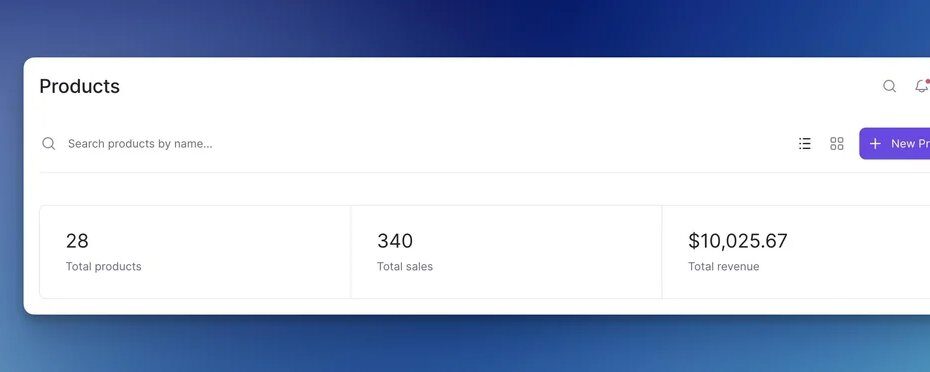
Total revenue just crossed $10k. After tax and refunds, about $7k actually lands in my account. Not a startup story. Not a failure either. Somewhere in the boring middle, which is where most indie devs live.
This post is for you if you're about to build your second app before the first one has a single customer. I was that person. First, how the studio actually runs. Then the 10 things I wish someone had told me in March.
How I run a one-person studio
Picking apps. Most of my apps have competitors, so "new idea" was never the test. I ask two questions. Is this clearly different from what exists, or just a duplicate? And do I use it myself every day? The second one matters most. If I don't use it daily, I can't convince anyone else to pay for it. Small ideas that fail the test, like a session manager or a website chatbot builder, get folded into 1DevTool instead of becoming their own app.
Stack and costs. The first six apps are Electron, because it's fast to build with. The next six are Tauri. Mobile is native (Swift, Kotlin), and the websites are Next.js. I'm slowly moving toward Rust + GPUI or native for speed. Running costs are mostly a Hetzner VPS (around $60 to $80 a month) and AI, which runs $200 to $350 a month because I pay for extra accounts to test different providers.
Pricing. Each app is a one-time purchase with a year of updates. After that the app keeps working, and you renew only if you want new updates. The free version is enough to get a real feel for the product. In 1DevTool, you only hit the limit when you add a third project. I launch below market price and raise it as the app grows.
Payments. I started on Lemon Squeezy and I'm moving to Polar. I don't accept local Vietnamese payment methods like bank QR transfers. As for piracy: you can't stop it completely, so I spend that energy on support and features instead.
Channels. Early users came from Facebook groups, dev communities and building in public on my own profile. Reddit turned out to be the most effective channel, both for users and for SEO. The trick is "alternative" keywords: someone searching "Coolify alternative" is already looking for something like Server Compass. My workflow is to ask AI for keyword ideas, check demand in Keyword Planner, then write Reddit posts around them. X mostly reaches other builders. My YouTube tutorials get few views but have brought in a few paying customers. SEO is the long game, with on-page work and cross-links between my sites. And when the product is good, word of mouth does the rest.
Launching. I ship a working MVP, no waitlist. I don't think waitlists work as well in the AI era. (I wrote about the four types of MVP years ago. These days the "real working app" one is cheap enough to just build.)
Time. Bugs and user-requested features come first. I rotate between 2 and 4 projects a day, about 4 to 6 hours in total. Hard problems and new apps get their own blocks. Marketing (demos, content, replying to comments) happened only when I felt like it, which, as you'll see below, was the real problem. I've also built internal tools, like one that collects user feedback and sends it to AI, to cut manual work.
Now, the 10 things I wish I knew.
1. "Build mode" is a comfortable way to avoid selling
Here's the revenue split so far:
- 1DevTool: $4.8k (56%)
- Bundles: $1.5k
- Server Compass: $1.3k
- 1AIVault: $434
- 1MarketingTool: $266
- Four apps together: $217
- Four apps: $0
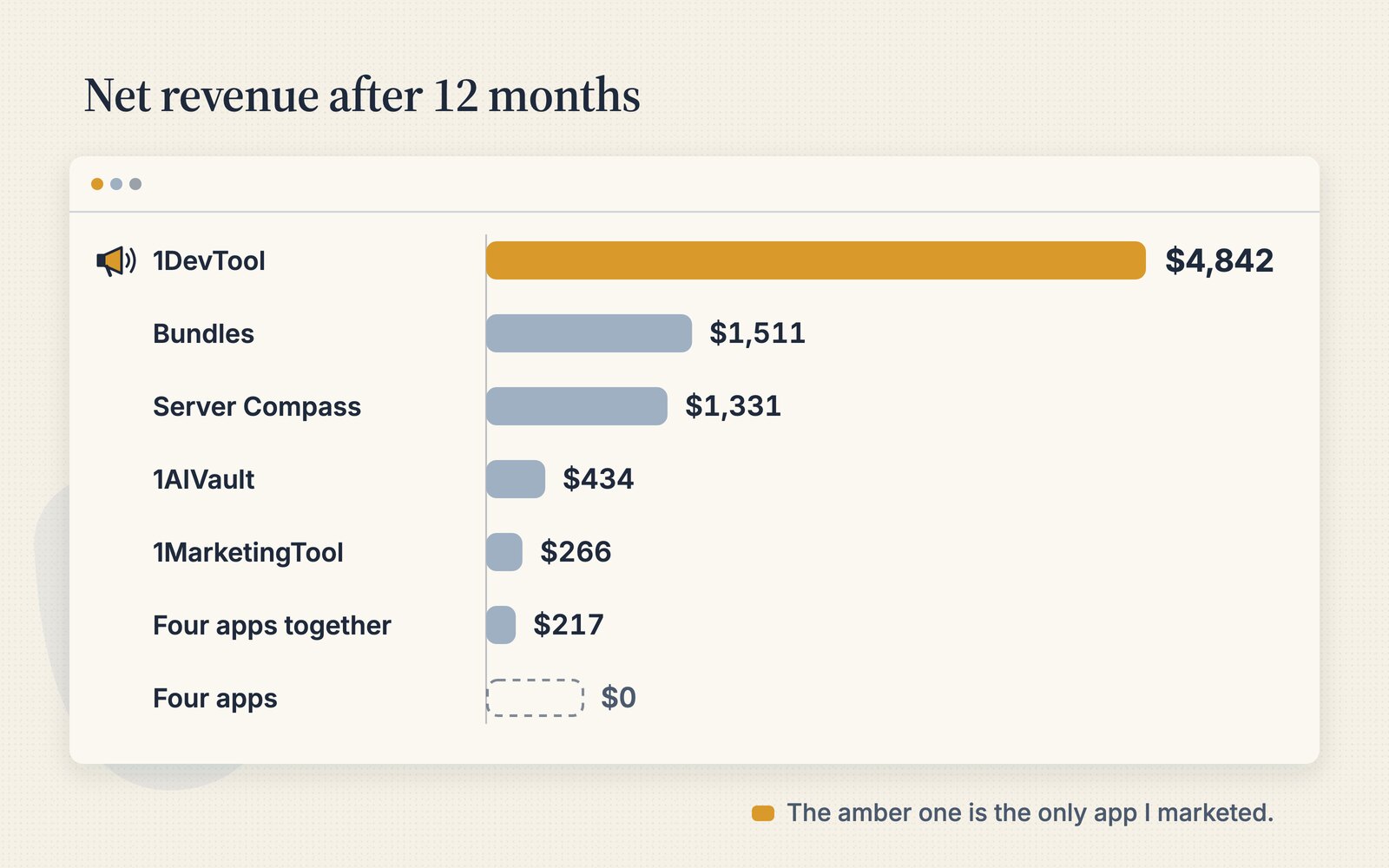
Why so unbalanced? Because 1DevTool is the only app I ever marketed. The other eleven got a landing page and a changelog, and then I went back to code.
Zero sales did not mean bad product. It meant never marketed. Those are very different problems, and I treated them as the same one for most of the year. (Funny thing: I wrote a whole case study about 200 hours and 0 sales years ago. Apparently I needed to learn it again, four times.)
2. Shipping releases is not marketing
In August, September and October I shipped 17 releases of 1DevTool each month. Orders went 27, 23, 13. Then I went on a trip, shipped nothing for two weeks, and orders went up.
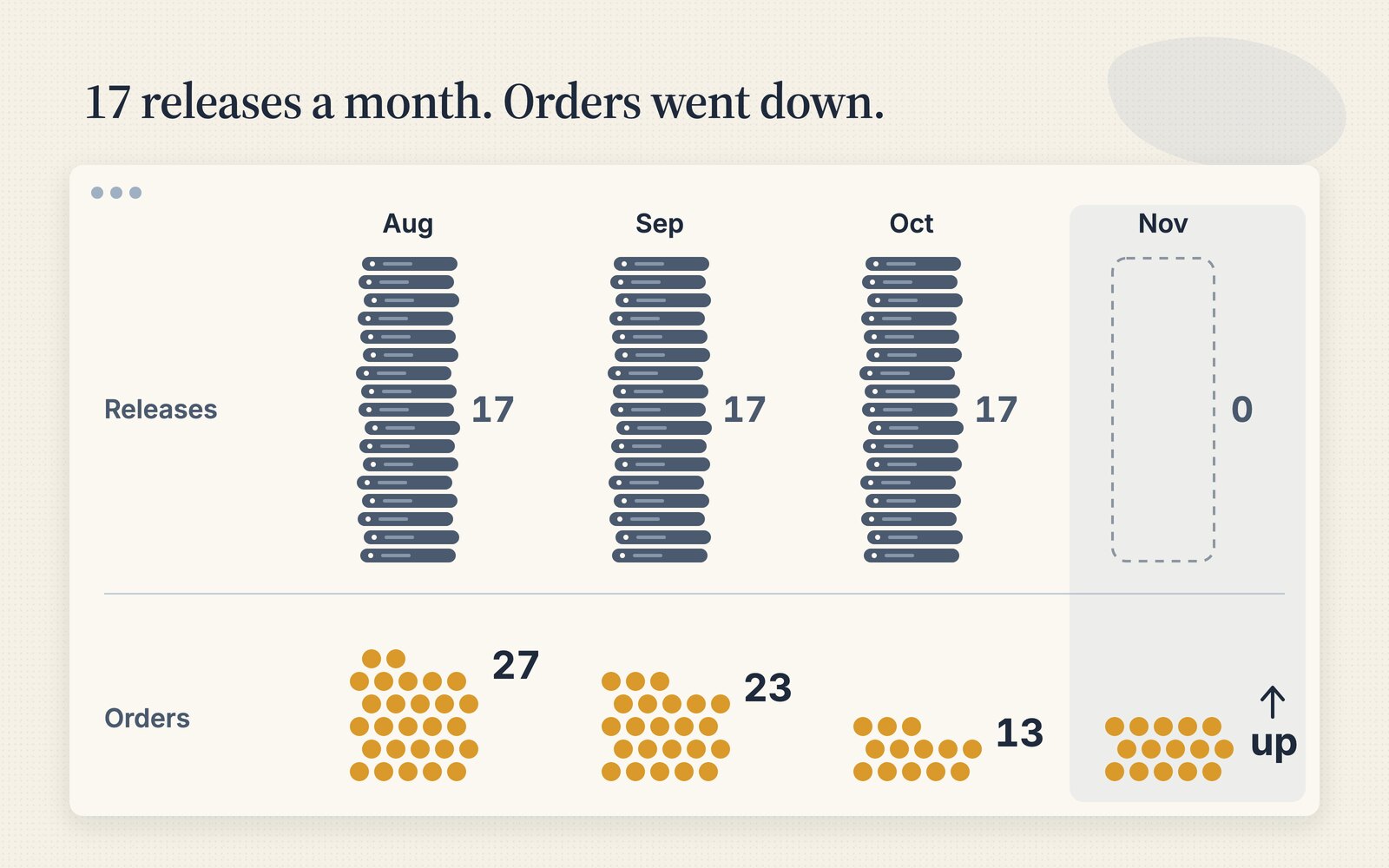
Each release pulled 100 to 230 installs. It felt like progress. The customers didn't care. It was just more building with a version number on it.
3. Every launch decays. Plan the second launch before the first.
- Server Compass: $33 in its first month, a peak of $296 in April, $59 by September.
- 1AIVault: $138 in June, then $122, $116, then $0 in September.
- 1MarketingTool: same shape, zero in October.
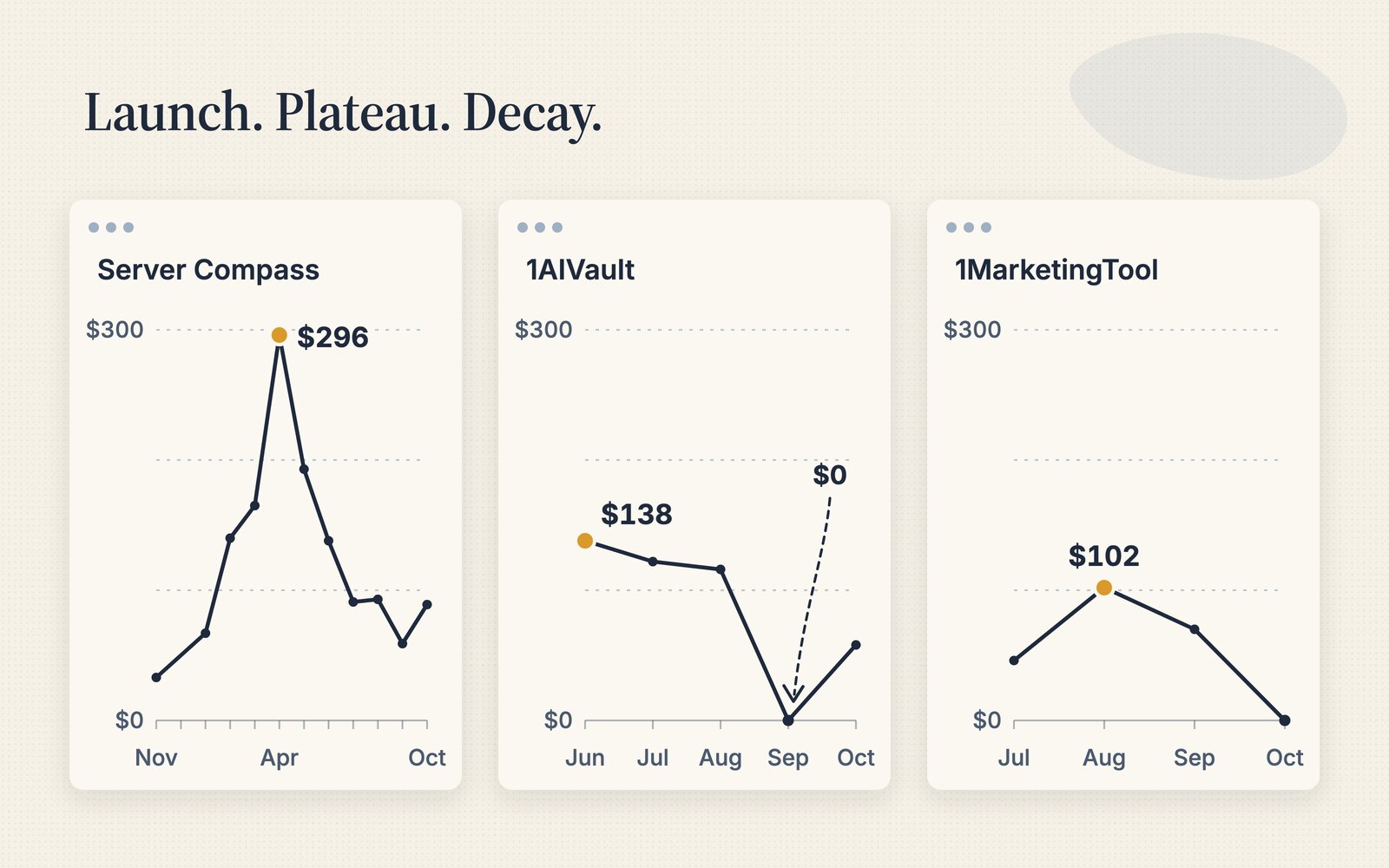
Launch, plateau, decay. Every single one. A new feature does not restart the curve. A new reason to talk about the app does. I never planned the second launch, so there was none.
4. Your home audience runs out. Go English earlier.
70% of 1DevTool buyers are Vietnamese, because that's where my audience is. (Earlier this year I wrote about how Vietnamese devs proved me wrong and paid. They did. Then the room started to empty.)
Vietnamese revenue per month: $1,308 in August, $574, $322, then $129 in the first half of November. Everyone else: $343, $745, $500, $594. One line decaying, one line growing, and I only looked in November.
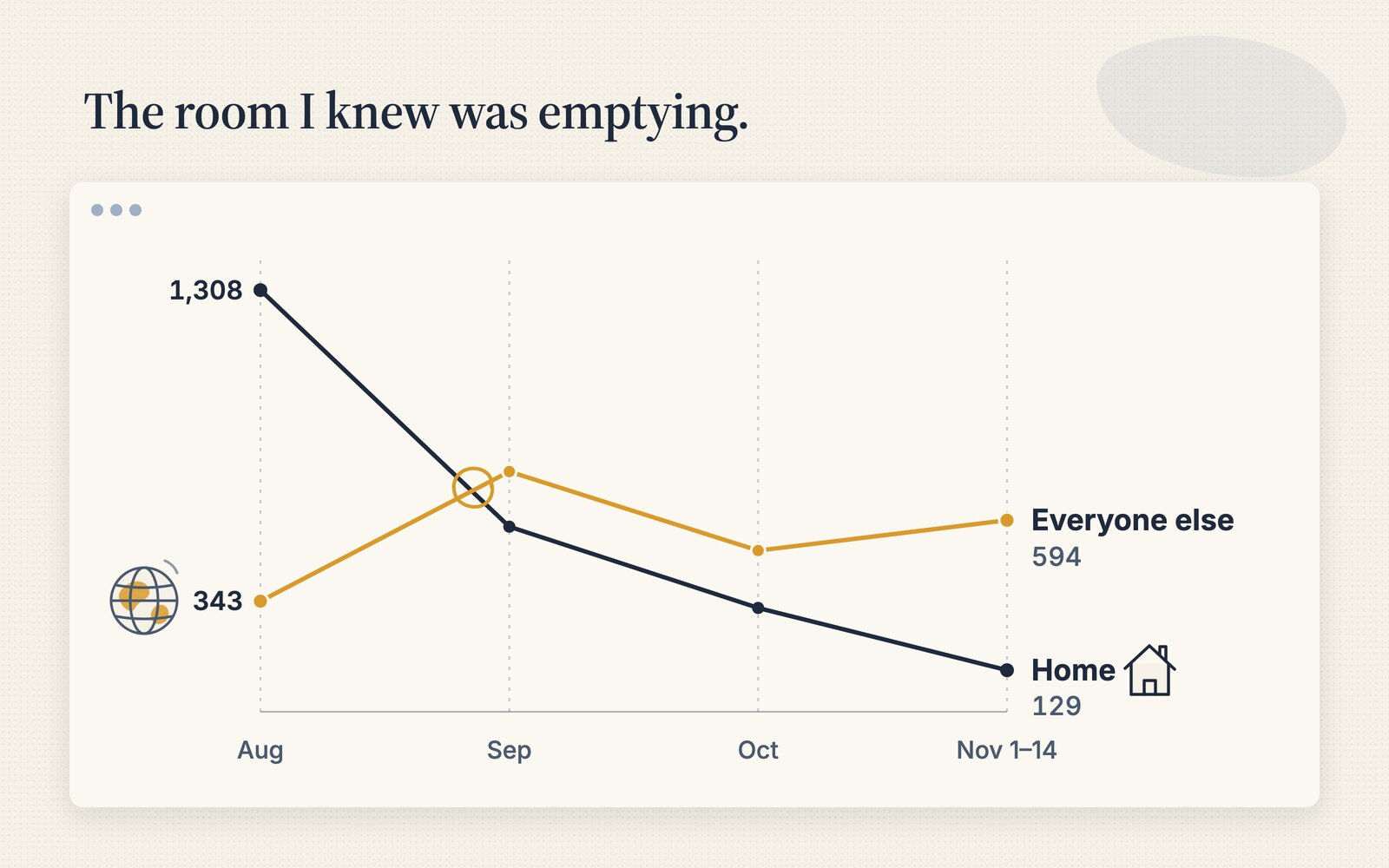
Half of the small apps' buyers were already American, coming from search, without me doing anything. The demand was there. I just kept talking to the room I already knew.
5. Traffic to free things does not buy your paid things
I get about 900 Google landings a day across my sites. A third go to a free 3D model library on 1DesignTool, which has sold exactly one license, at a discount. The blog, about 8 posts a week, brings 6% of traffic.
People searching "free 3D models" want free 3D models. I knew that. I still counted the traffic as if it was mine.
6. Packaging sold more than new apps
My best fortnight recently was $723. $328 came from bundles and $120 from device upgrades. Single-app sales were flat.
Of 117 single-device keys, 113 use exactly one device. One guy filled 3 devices in a day and upgraded to 5 four days later. A $30 upgrade page took a day to build and outsold three of my apps. Still a bit sad about that.
7. Label your checkout links from day one
In November sales went up 1.8x with no release, and I couldn't figure out why. Lemon Squeezy orders carry no referrer, my webhook saved nothing useful, and the nginx log keeps 14 days.
I added source tags to every buy link on November 15, eight months after the first sale. Every order before that is a mystery. It's a ten-line script. Do it before your first customer, not your 150th.
8. The 13th app is the easiest thing to build and the most expensive
In July I pulled 200 keywords and built seven MVPs in three days with AI agents. 900+ tests, all green. None launched. In September I put up five landing pages for apps that didn't exist; within ten days three of those domains redirected elsewhere.
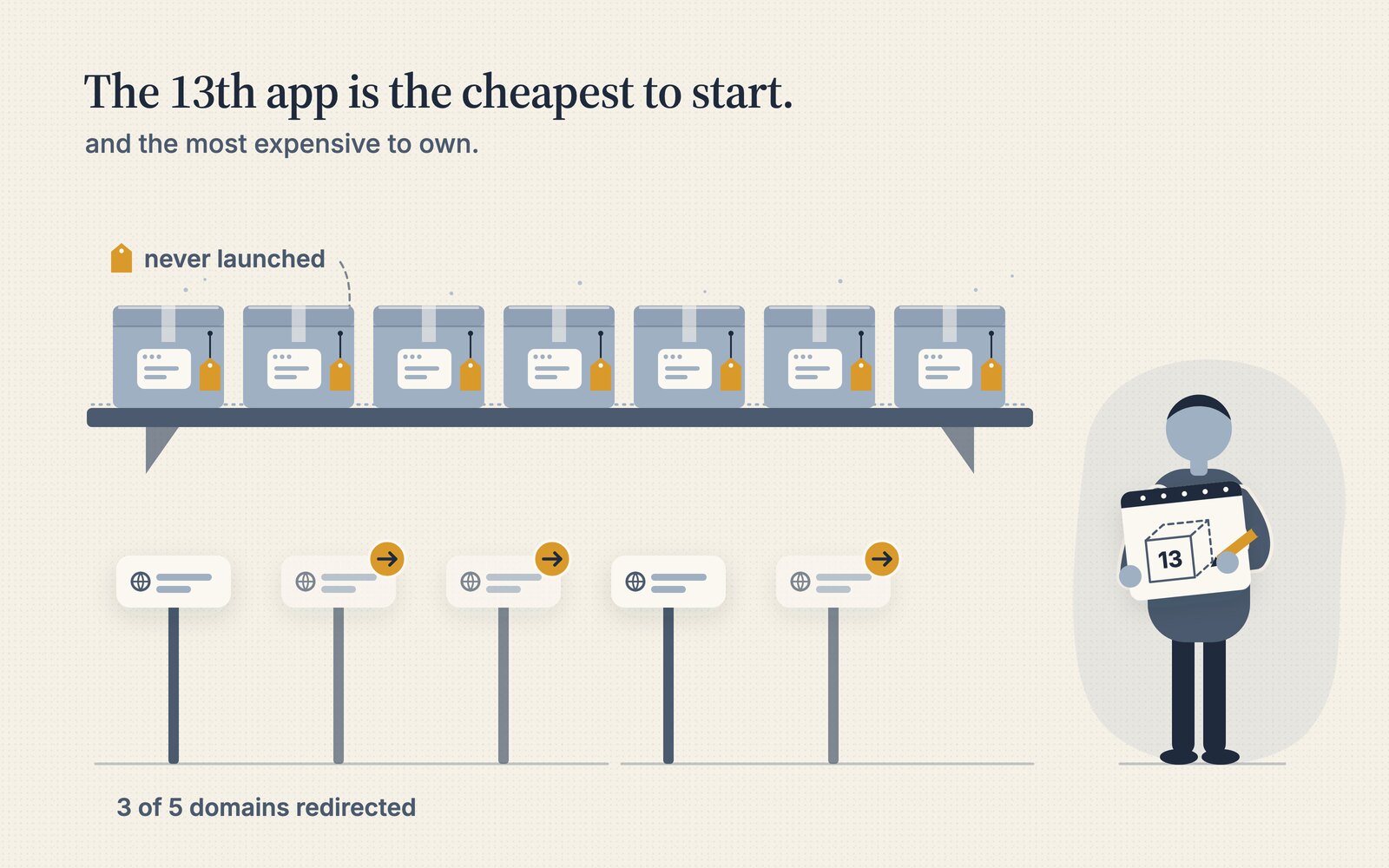
Every one of those was fun to start. Each one was a week I didn't spend talking to a 1DevTool user.
9. Nobody asked for most of my 343 features
The feedback board has 68 feature requests. The most upvoted has two votes. Almost every request is one of two things: support one more coding agent CLI, or show how much quota each agent has left. Nobody asked for the database client, the HTTP client or the built-in browser. Those took months.
Meanwhile three free open source competitors showed up. "$29 once" is no edge against free. What people actually pay for is that the agents work together: they hand off work, review each other, and when one hits its limit, the backup takes over. One feature, buried under 342 others. Build what the two-vote request asks for.
10. Someone will offer to buy your best app. Do the math first.
This wasn't the first time. In June I turned down $15K for 1DevTool when it was 2.5 months old.
In October someone offered "$50k in range". Then I did the math. 1DevTool makes $8k to $9k a year, and small apps sell for 1.5x to 3x annual revenue: realistically $12k to $25k. The non-compete would have blocked exactly what I want to build next for 36 months, and every bundle is anchored on 1DevTool. That "$50k" would have cost me the whole studio.
I didn't sell. The number in the email and the number in the contract are not the same number.
Plan B
I'm keeping all 12 apps for two more years. Not because they're all winners, but because the problem was never the apps.
The new rule: a fixed share of every week goes to marketing, in English, for 1DevTool and the Complete bundle. One small app at a time gets a 3 to 4 week marketing test, with the pass mark written down before it starts. If it fails, it stays in the bundle on maintenance. No 13th app.
$10k in 10 months is not a business yet. It's proof that some people pay. The next 10 months are about making them find me, instead of waiting for them to.
If you're building your second app before the first one has customers, close the editor for an afternoon and go talk to the three people who paid. I wish I had.
Which of these did you learn the hard way? Leave a comment.
Related Posts
Discover more content you might enjoy

Five months and 120 releases later, 1DevTool hit 100 sales and 100 daily users. Why I was wrong about Vietnamese developers paying for software.

A CTO offered $15,000 for 1DevTool when it made $300 a month. The valuation math, the fears that nearly made me sell, and why I said no.

Introducing the challenge to create an English course in 2 weeks to market the SaaS app Bubble Component Collection. The author shares the strategy of using Info Products (ebooks, courses, templates) to promote software, differences between info products and regular blogging, and the plan to create a course under 3 hours demonstrating how to use the Chrome extension to build app frontends.

Day nine of the Profitable MVP in 30 Days challenge, sharing about the SoundBar launch day on platforms like ProductHunt, Reddit, and Hacker News, and the joy of getting the first sale from Reddit.

Real experience learning the Algorithm Specialization on Coursera - from greedy algorithms to dynamic programming. This post shares details about course structure, teaching quality, exercise system, and how to apply for financial aid to learn for free. An ideal choice for those wanting to learn algorithms systematically from top instructors.

The journey of developing EmboldenIT - a blockchain app for storing and sharing highlights from web content. This post shares the process from idea to implementation, technical challenges building a DApp on Blockstack platform, and designing user experience with a Chrome extension to optimize saving important content.