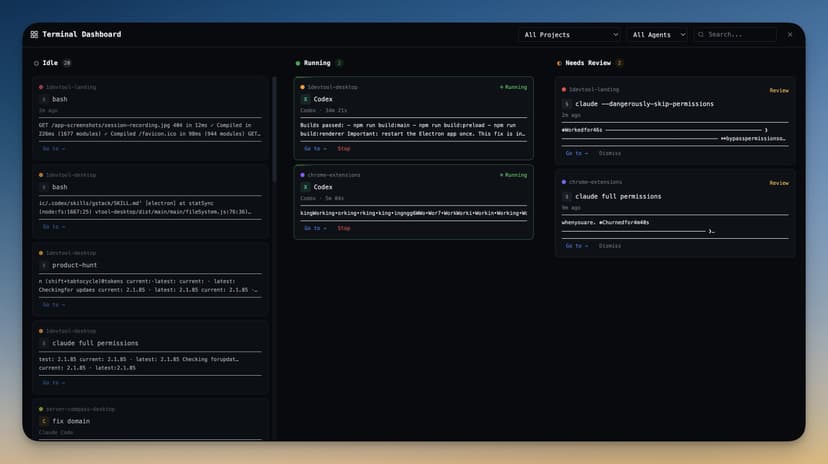
I was running Claude Code, Codex, and Gemini CLI in three different terminals, plus VS Code, Chrome, Postman, and TablePlus — just to ship one feature. So I built 1DevTool: one window per project, every AI agent in one place, everything persists.
All posts in the product-development category
I was running Claude Code, Codex, and Gemini CLI in three different terminals, plus VS Code, Chrome, Postman, and TablePlus — just to ship one feature. So I built 1DevTool: one window per project, every AI agent in one place, everything persists.

Final summary of the 30-day profitable MVP challenge, evaluating the entire development process of three different apps: SoundBar, ReadingPointer, and Focusify. Detailed analysis of revenue, costs, actual profit achieved, along with valuable lessons about choosing business models, focusing on one product instead of spreading resources thin, and future plans for the developed products.

Days 28-29-30 of the profitable MVP challenge where I look back at the original plan and assess progress. Sharing how I plan to hit the $1000 profit goal by buying my own app, and announcing the new app Focusify.app instead of letmethink. Also preparing landing page, promo video, and images for launch day.

Day 26 of the profitable MVP challenge where I introduce a new idea - an app to automatically open and arrange applications on Mac screen. The idea came from personal need when constantly opening multiple apps together for different tasks. Also sharing new knowledge about using Apple Scripts for automation.

Day 27 of the profitable MVP challenge where I decide to abandon the Group Opener idea and pivot to building a 'silly app' - a simple, easy-to-build app that still has profit potential. Explaining what silly apps are: simple features that seem unremarkable but can achieve massive downloads, like fart sound apps with 50 million downloads or beer drinking simulators with 90 million downloads.

Day 25 of the profitable MVP challenge where I admit ReadingPointer's failure - user retention is extremely low and no one cares about the paid features. Sharing lessons learned including targeting users with higher willingness to pay, challenges of building cross-browser extensions, and difficulties turning scientific methods like speed reading into products.

Day 24 of the profitable MVP challenge where I decided to launch ReadingPointer on Product Hunt without waiting for Chrome Web Store to approve the new version. Analyzing initial Google Analytics data after 18 hours including new users, average session duration, and button click behavior.

Day 23 of the profitable MVP challenge where I share the frustration of waiting for Chrome Web Store to approve my app update. Also discussing early user feedback on the UI and weighing two options: focus on content marketing or build a new app in the remaining 7 days.

Day 22 of the profitable MVP challenge, sharing a detailed checklist before launching the ReadingPointer product. The post categorizes items to check into groups like technical, website, marketing content, distribution channels, and analytics, ensuring the product is polished and ready for users.

Day 21 of the profitable MVP challenge, explaining the early adopter concept and sharing how to experiment with this model for the ReadingPointer app. The post describes creating a premium version introduction page with special benefits for early users, implementing a 'Go Pro' button on the homepage and app to test users' willingness to pay.

Day 20 of the profitable MVP challenge, sharing about building the landing page for ReadingPointer.com using Hugo and Netlify. The post also describes plans for creating a promo video and detailed instructions on how to easily convert a Chrome extension to a Firefox add-on using tools like Get CRX and extensiontest.com.

Day 18 of the profitable MVP challenge, sharing about completing the Speed Reading extension for $160 after 3 days working with a freelancer on Upwork. The post describes the process of adding analytics, final adjustments, and submitting the app to Chrome Web Store for review, plus sharing inspiration from the book 'Start Something That Matters'.

Day 17 of the profitable MVP challenge, analyzing monetization models for Chrome extensions, comparing free, one-time payment, and monthly subscription versions. I decided to test the sponsor and donation model, and set up tracking metrics like user time spent to evaluate effectiveness.

Day 16 of the profitable MVP challenge, sharing about the Speed Reading app development progress with a freelancer on Upwork, the naming process from SpeedReading to ReadingPointer, and the experience hiring a designer on Fiverr for $15 to create a professional logo.

Day 13 of the profitable MVP challenge, sharing the development of a Speed Reading Chrome extension. The post analyzes different speed reading methods like RSVP and Tim Ferriss's method, explains the main features including Reader Mode and Reading Pointer, and shares the process of learning and creating a simple Chrome extension.

Day 11 of the profitable MVP challenge, sharing about searching for new ideas after struggling with the first product. This post introduces the Reading Tracker idea - a tool to help users create, manage, and share their reading lists, with features like syncing from Goodreads, auto-completion when typing, and Amazon affiliate link integration.

Day one of the 30-day profitable MVP challenge, focusing on finding and evaluating ideas. I share how to find ideas from personal problems, analyze pros and cons of this approach, and introduce three initial ideas: Speed Reading Chrome Extension, Pomodoro Timer app, and YouTube music player.