Book Review: Moonwalking with Einstein
Review of 'Moonwalking with Einstein' by Joshua Foer - a journey exploring the art and science of memory, from the perspective of a journalist who participated in the USA Memory Championship.

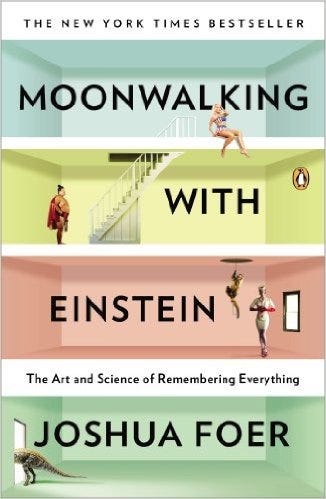
The first time I saw the cover, I had no idea what the book was about without reading the subtitle. For those who don't know, the Moonwalk is a dance move that makes it look like the dancer is stepping forward while actually moving backward. This dance move became world-famous after Michael Jackson performed it during "Billie Jean" on March 25, 1983 (from Wikipedia). And Einstein - well, everyone knows who that is. When I saw the subtitle "The Art and Science of Remembering Everything," I finally realized this was a book about memory. The title and cover were already eye-catching, and since my memory isn't great, I decided to read it to see if I could improve.
The book is written from the perspective of the author, Joshua Foer - a freelance journalist. The story begins by chance when Joshua attends the USA Memory Championship to write an article. What do contestants have to do in this competition? I don't remember the specific rounds because there are so many, but it's quite simple really. Contestants just need to memorize a few thousand digits after the decimal point in Pi, or memorize an 800-line poem and recite it forwards and backwards.
At the USA Memory Championship, Joshua befriended two contestants, Ed and Lukas (both in the top 10). Joshua started following these two to figure out how they could have such superhuman memory. The reader will learn about the person with the worst memory in the world, who can only remember things for about 6-7 seconds, and the person with the best memory in the world, who can barely forget anything.
The author introduces research, scientists, and memory techniques, explaining how memory is formed. Unlike typical memory training books that simply provide methods to practice, Moonwalking with Einstein is an adventure of an ordinary person wanting to improve their memory. This might be what makes the book special - readers can relate to Joshua.
By halfway through the book, you'll understand why it's titled "Moonwalking with Einstein." It's about using imagery to remember things. We also remember things longer when associated with specific times and places. For example, if someone asks what you ate last Tuesday, you probably won't remember. But if you recall who you ate with, where you were, what you ate, what you talked about during the meal, you can totally remember.
There's another great thing about this book - if you like martial arts novels, you'll definitely love Moonwalking with Einstein. Near the end, I realized that after a year of seeking masters, studying memory from various experts, the author decided to compete in the USA Memory Championship himself. I honestly didn't read reviews beforehand, so I was quite surprised. Even more surprised when he won first place and was selected to compete at the World Championship. This plot is exactly like martial arts novels - the main character starts with no skills, but by the end becomes the world's best.
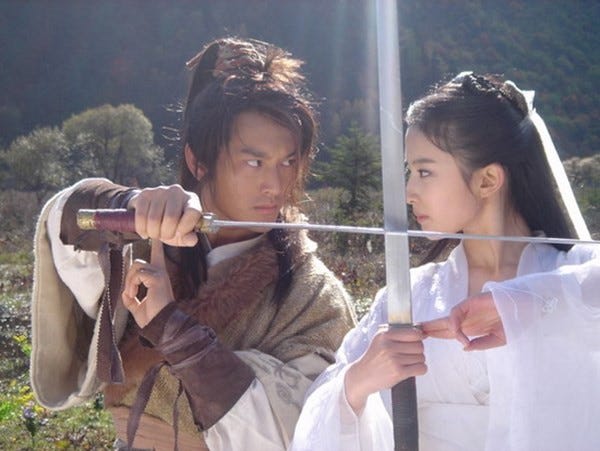
No one is born a master :))
In summary, this is a must-read book. There are many more memory techniques and stories that I can't cover in this review. If you've read memory books, mind mapping, or speed reading by Tony Buzan or Adam Khoo, Moonwalking with Einstein is even better. You not only learn how to improve memory but also learn many other things:
-
To become great, you need to learn from great people. Like how Joshua sought out Ed and Lukas (top-ranked at USA Memory Championship), Tony Buzan, and scientists to learn from.
-
Practice makes perfect. If an ordinary person can win the USA Memory Championship, then you can absolutely achieve your plans, dreams, and aspirations. This might be the biggest lesson the author wants to leave behind, in my opinion.
Below is a video where the author teaches some basic skills, feel free to check it out:
Related Posts
Discover more content you might enjoy

Is Blogging Really Dead?
In the AI era, is blogging dead? Pieter Levels says blogs are dead, but I believe readers will crave quality blogs with unique character - no one wants to read AI-written blogs anymore.

Detailed walkthrough of rebuilding a blog from scratch with vibe coding, from data migration to implementing new features, helping readers understand the personal blog development process.

10 Years of Reading - A Journey of Growth
Reflecting on my 10-year reading journey, from a first-year college student to building a collection of 265 books. Each book has shaped my thinking and contributed to who I am today - from Vietnamese and world literature to personal development, business, and philosophy. This is a story of growth through reading and the valuable lessons learned along the way.

Why Keep Skateboarding Despite the Falls?
Sharing experiences and perspectives on skateboarding as a way to train willpower and face challenges, helping readers understand the spirit of resilience and persistence in life, from skateboarding to important life decisions.

Sharing a case study on validating a dating app idea for the sapiosexual community with minimal cost, from market research to MVP building and feedback collection.

Explaining the differences between three point representations in Unity3D: ScreenPoint (pixel-based frame representation), ViewPoint (frame always has height and width of 1), and WorldPoint (coordinates shown through Transform.Position). The purpose of having these three representations is to help developers create flexible cross-platform games across different screen sizes.